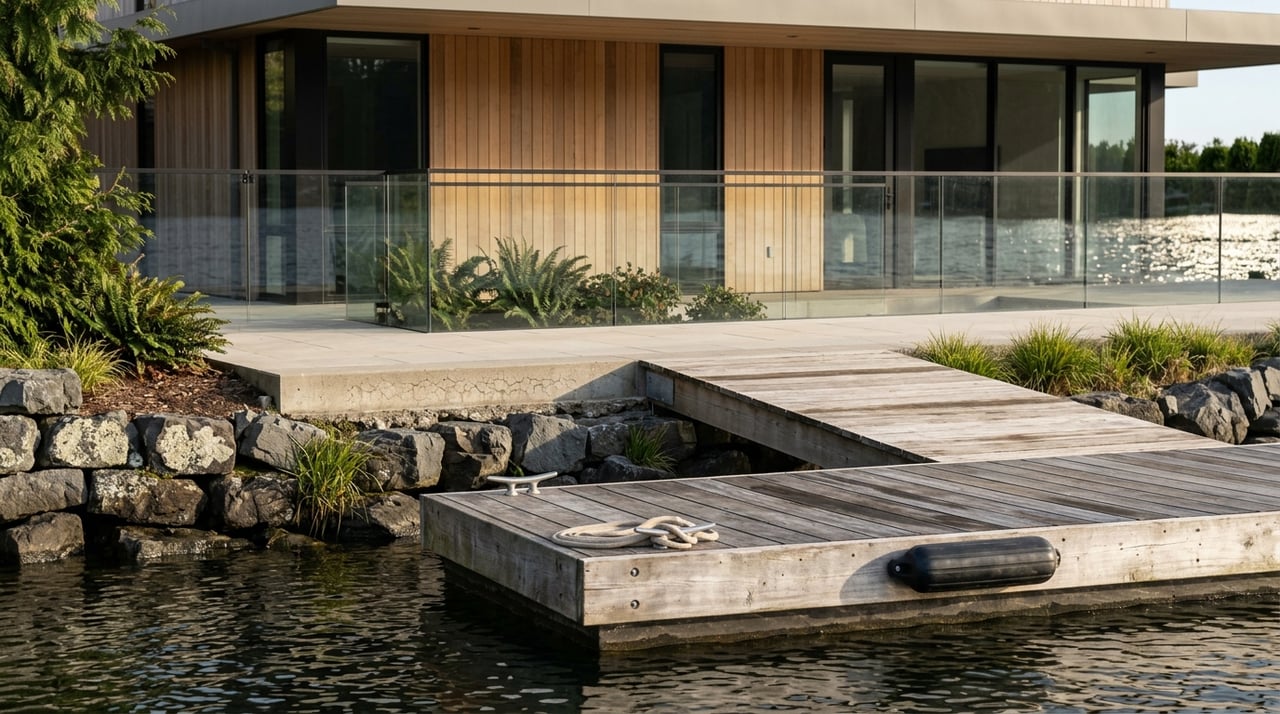
Understanding Mercer Island’s Distinct Waterfront Micro-Markets
April 16, 2026
April 16, 2026
If you’ve looked at Mercer Island waterfront homes and wondered why two properties on the same lake can command very different prices, you’re asking the right question. Mercer Island’s shoreline is not one uniform luxury market, and that matters whether you plan to buy, sell, or simply understand value more clearly. Once you see how exposure, dock utility, privacy, and public-access patterns shape each stretch of shoreline, the pricing starts to make sense. Let’s dive in.
Mercer Island is just over five miles long and about two miles wide, but its shoreline behaves like several smaller markets rather than one broad category. According to the King County Assessor’s 2024 area report, the north and west sides usually draw the strongest interest because of Seattle views and stronger afternoon light.
The south end and east side often trade at different levels because they tend to offer Bellevue or Renton views, more tree cover, and the winding East Mercer Way approach. That does not make them lesser locations. It simply means buyers value them differently when comparing one waterfront setting to another.
The city’s shoreline planning documents reinforce this point. Most of Mercer Island’s roughly 15 miles of shoreline are low-density single-family residential, but that shoreline is interrupted by parks, street ends, private clubs, and neighborhood waterfront parks that change access, privacy, and everyday use from block to block.
On Mercer Island, orientation matters. North and west-facing waterfront is typically the premium benchmark because it captures Seattle views and stronger afternoon and evening light, based on the county assessor’s market analysis.
By comparison, east-side and some south-side waterfront often offers a more filtered, tree-lined experience. For many buyers, that can feel more private and sheltered, but the market usually prices that setting differently than a view-forward west or north exposure.
Waterfront value is not just about what you see from the house. It is also about how the shoreline works. The city’s shoreline plan notes that new piers and docks are limited to water-dependent uses or public access, while existing docks can be repaired or replaced, and new overwater residential dwellings are not allowed.
In practical terms, existing dock rights, current moorage utility, and shoreline configuration can have an outsized effect on value. On a lake where waterfront opportunities are already limited, usable shoreline features are a major differentiator.
Some stretches of Mercer Island waterfront sit near parks, boat launches, or street ends. That can mean easier shoreline access and recreational convenience, but it can also mean more seasonal activity nearby.
The city says there are 20 street ends totaling six acres and 1,140 feet of waterfront. Developed street ends may include trails, beaches, docks, wading access, or car-top boat launching, and parking is usually limited. For buyers and sellers alike, that balance between convenience and privacy is worth understanding before assigning value.
Many Mercer Island waterfront sites are already improved, and truly buildable vacant lots are scarce. The assessor’s report shows a broad mix of home ages and quality levels, from older homes to high-end custom estates, with limited easy replacement inventory.
That means lot slope, tree cover, view preservation, renovation potential, and the replaceability of the home itself can all influence pricing. In many cases, buyers are not just evaluating the house you see today. They are evaluating the long-term options the property offers.
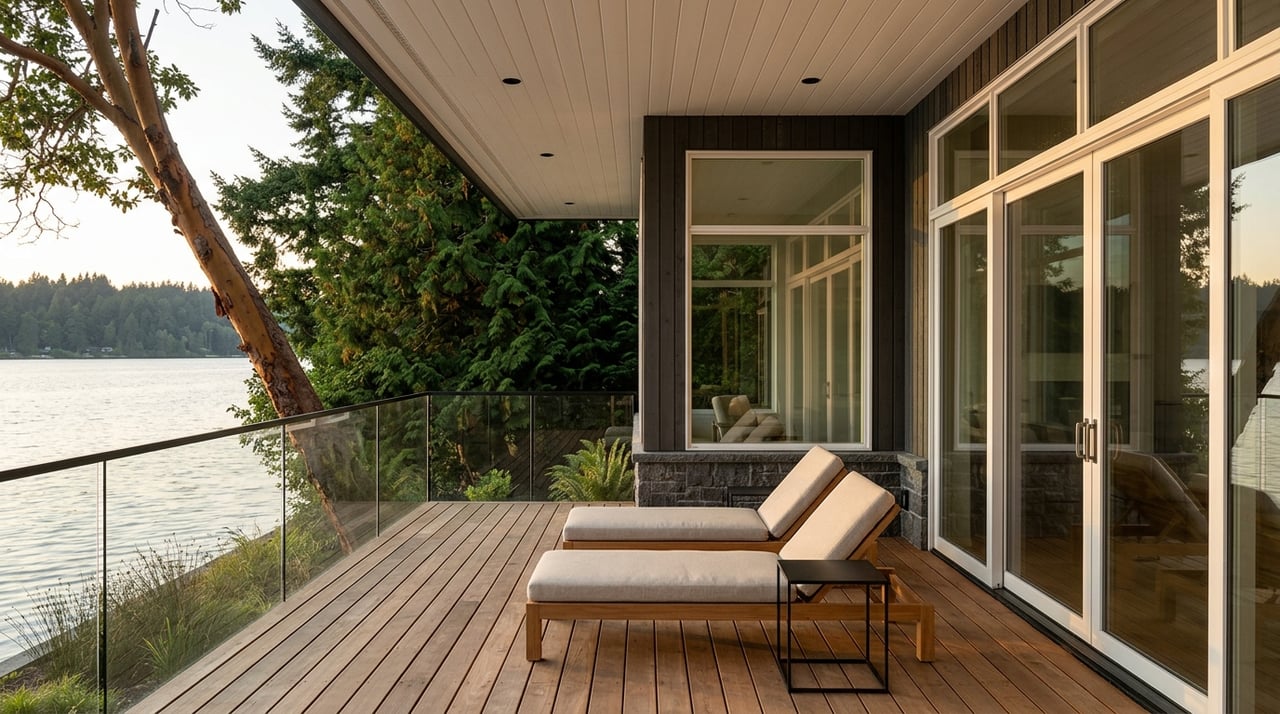
The west shore is the classic premium Mercer Island waterfront setting. It faces Seattle and typically captures the kind of afternoon and evening light many buyers want most.
This area can support top-tier pricing. The 2024 waterfront sales report identified a $17.3 million sale at 1841 W Mercer Way, a strong signal of what the market will pay for standout west-facing frontage.
At the same time, not every west-shore location feels the same in daily life. Groveland Beach Park, the island’s only west-side beach, sees high summer visitation, including during Seafair. So a home near this stretch may offer prestige and beautiful outlooks while also experiencing more public activity than a more secluded shoreline segment.
The north end often appeals to buyers looking for estate scale, boating utility, and an ultra-luxury ceiling. It is one of the island’s strongest references for trophy waterfront value.
The highest Mercer Island waterfront sale in 2024 was 7002 N Mercer Way at $28.5 million, according to the 2024 waterfront report. That sale helps illustrate how the north end can compete at the top of the market.
This area also connects with major public shoreline amenities. Luther Burbank Park, on the northeast end, includes three-quarters of a mile of waterfront and offers public swimming, boating, and fishing facilities. The city also has a dock renovation project there aimed at adding floating dock space and improving shoreline access.
The east shore usually trades on a different set of strengths. Rather than leading with skyline drama, it often appeals through privacy, tree cover, and access to boating and shoreline amenities.
The county assessor specifically points to the twisting East Mercer Way approach, reduced afternoon sun, and filtered light as reasons east-side waterfront can price below north and west exposures when other factors are similar. That pricing difference is not a flaw. It is simply part of how buyers sort value on Mercer Island.
This side also sits closer to several public-access and boating nodes, including the Mercer Island Boat Launch, Clarke Beach Park, and Calkins Landing. For some buyers, that convenience is a real benefit and part of the appeal.
Not every waterfront lifestyle on Mercer Island depends on owning a fully private dock. Some shoreline segments operate in a middle ground between fully private waterfront and public-adjacent living.
The city’s shoreline plan says two private waterfront clubs own a combined 1,194 feet of frontage and provide swimming, moorage, and boat launching to many island households. The same document notes that Covenant Shores has about 650 feet of shoreline used for open space, swimming, picnicking, and moorage.
This creates a distinct micro-market where buyers may value shoreline access, boating utility, and lifestyle convenience differently than they would on a property centered on exclusive private frontage. If you are comparing options, this category deserves its own lens.
Scarcity is one of the clearest themes in this market. The latest full-year waterfront report recorded 18 closed waterfront sales on Mercer Island out of 237 total closed sales in 2024.
That same report shows a waterfront median price of $8.112 million, average days on market of 159, average linear frontage of 101 feet, and average price per square foot of $1,815. By comparison, NWMLS reported Mercer Island’s 2024 overall residential median at $2,436,500, meaning the waterfront median was roughly 3.3 times the island-wide median.
The year-over-year shift was also notable. The waterfront median rose 57 percent from $5.18 million in 2023 to $8.112 million in 2024, according to the report. Average frontage also increased from 69 feet in 2023 to 101 feet in 2024, suggesting that larger shoreline parcels made up a heavier share of the closed sales mix.
Another important signal is how private marketing can shape this segment. The top three waterfront sales in 2024 were 7002 N Mercer Way at $28.5 million, 1841 W Mercer Way at $17.3 million, and 5045 Forest Avenue SE at $15.15 million, with the Forest Avenue transaction noted as off-market. In a market this thin and relationship-driven, broad public listing exposure is not always the whole story.
If you are buying Mercer Island waterfront, it helps to compare homes by function before you compare them by headline price. A home with quieter privacy, limited sun, and strong boating access serves a different goal than a west-facing property centered on views and evening light.
As you narrow your search, focus on a few key questions:
On Mercer Island, the best purchase is often the one that fits your priorities most clearly, not the one that looks strongest in a broad waterfront search result.
If you are selling, broad labels like “Mercer Island waterfront” only go so far. The strongest positioning usually comes from identifying exactly which micro-market your home belongs to and then presenting it accordingly.
For one property, that may mean emphasizing west-facing light and skyline views. For another, it may mean highlighting estate scale, dock utility, privacy, or adjacency to boating amenities. The more precisely your property is framed, the easier it is for qualified buyers to understand the value.
This is also where pre-sale strategy matters. When buyers know that vacant shoreline opportunities are scarce and many properties involve renovation or replacement analysis, details about lot usability, shoreline configuration, and existing improvements become especially important. A polished presentation backed by clear market context can help buyers connect the dots faster and more confidently.
Mercer Island waterfront is nuanced, and that is exactly why experienced, hyper-local guidance matters. If you are thinking about buying, selling, or quietly exploring your options on the island, John Thompson offers senior-level guidance, high-production marketing, and strategic representation tailored to complex, high-value homes.
Stay up to date on the latest real estate trends.
Etiam non quam lacus suspendisse faucibus interdum. Orci ac auctor augue mauris augue neque. Bibendum at varius vel pharetra. Viverra orci sagittis eu volutpat.