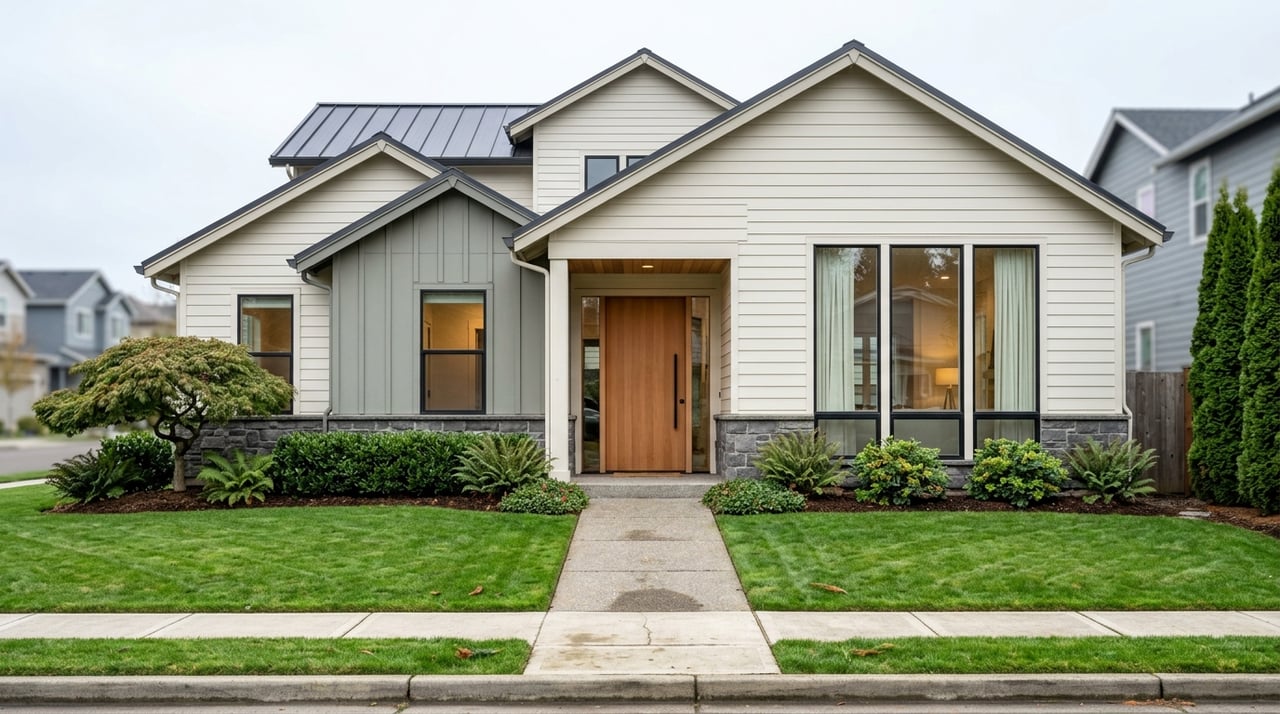
Seattle vs Eastside Real Estate for First-Time Buyers
April 2, 2026
April 2, 2026
Trying to choose between Seattle and the Eastside for your first home search? You are not alone. For many first-time buyers in King County, this decision feels bigger than picking a city because it shapes your daily routine, your budget, and how flexible your home may be in the years ahead. The good news is that you can frame the search clearly once you know what actually changes from one side of the lake to the other. Let’s dive in.
When buyers say “Seattle or the Eastside,” they are usually comparing two different lifestyles, not just two locations on a map.
Seattle is one city with a denser urban pattern. The Eastside, by contrast, is a group of cities with different housing mixes and day-to-day rhythms, including Bellevue, Redmond, and Kirkland. That matters because your best fit may come down to housing type, commute style, and long-term flexibility more than the address itself.
According to the U.S. Census QuickFacts for Seattle, Seattle had 8,791.8 people per square mile in 2020. That compares with 4,538.2 in Bellevue, 4,421.8 in Redmond, and 5,176.6 in Kirkland. Seattle also had a 2020 to 2024 owner-occupied housing rate of 43.7%, compared with 52.0% in Bellevue, 43.2% in Redmond, and 60.8% in Kirkland.
In practical terms, Seattle often fits buyers who want a more neighborhood-based, car-light routine. The Eastside includes some more urban, transit-centered areas as well as more owner-heavy residential areas, depending on the city.
For many first-time buyers, price is the fastest way to narrow the search.
Citywide median values currently make Seattle the lower-cost entry point in this group. Seattle’s median owner value is $938,600, while Bellevue is $1,340,300, Redmond is $1,167,800, and Kirkland is $1,115,400, based on the latest Census city profiles.
Rent tells a similar story. Seattle’s median gross rent is $2,030, compared with $2,572 in Bellevue, $2,409 in Redmond, and $2,401 in Kirkland. If you are weighing whether to keep renting longer or buy sooner, those citywide numbers can help you think through your options.
That said, citywide medians are directional, not predictive. Individual neighborhoods and property types can vary widely inside each city, so your search should stay grounded in the specific type of home you want and the monthly payment you can comfortably carry.
Your first home search gets easier when you decide what kind of property actually fits your stage of life.
Seattle often offers more condo and apartment-style entry points. In the city’s 2021 market-rate housing needs and supply analysis, Seattle reported about 370,000 housing units, with about 75% of owner-occupied units in detached single-family homes. At the same time, more than 90% of units permitted from 2010 to 2019 were in multifamily or mixed-use buildings.
Bellevue and Redmond have also seen meaningful growth in attached and multifamily housing. Bellevue’s city analysis says housing growth from 2018 to 2023 came from townhome and multifamily development rather than single-family housing, according to the Bellevue city profile. In Redmond, the city counted 14,254 single-family residences and 21,932 multifamily units in 2024, based on the Redmond city data summary.
Kirkland stands out a bit differently. Its owner-occupied rate is 60.8%, which is the highest in this comparison, based on the Kirkland Census profile. That can make it worth a closer look if you are drawn to a more owner-heavy market and want to explore homes with a stronger detached-home feel.
The old Seattle-versus-Eastside debate often focused on crossing the lake. Today, the better question is how you want to move through your week.
On March 28, 2026, Sound Transit opened the Crosslake Connection and completed the 2 Line across Lake Washington. The full line now connects Lynnwood and Redmond, with stations at Mercer Island and Judkins Park linking the Eastside and Seattle through the I-90 corridor. Sound Transit says trains run about every 8 minutes at peak at the new stations and every 10 to 15 minutes the rest of the day.
That is a real shift for first-time buyers. Bellevue and Redmond, in particular, now have stronger rail connections into Seattle than many buyers remember.
Still, the region is not one uniform transit environment. The current Sound Transit service map shows a mix of rail and express bus connections, including routes such as 545, 550, 554, and 560. For many households, the practical difference is whether you want a routine built mostly around rail and walkable nodes or one where driving still plays a bigger role for errands and weekends.
A first home is not just about what works now. It is also about what the property might let you do later.
Seattle and Eastside cities are all expanding housing options through zoning and code updates. Seattle recently adopted new middle housing codes that allow most Neighborhood Residential lots to have up to four units, and some up to six, with accessory dwelling units allowed in all zones. Seattle also says ADUs may be up to 1,000 square feet, or 1,200 square feet if they include three or more bedrooms.
Bellevue, Redmond, and Kirkland are also widening the range of allowed housing types. Bellevue has updated rules for co-living, middle housing, and ADUs through its recent land use code amendments. Redmond now allows a broad range of housing forms in residential neighborhoods, including duplexes, triplexes, fourplexes, fiveplexes, sixplexes, townhouses, stacked flats, courtyard apartments, and cottage housing. Kirkland has also advanced code changes around co-living, cottages, and ADUs.
For you, this means the better question may be: What kind of property gives me options later? A home with ADU potential, a layout that could work well for housemates, or a property type with broad resale appeal may offer more flexibility than a home with no realistic expansion path.
If you are feeling overwhelmed, use this short framework to organize your first-home search.
Many buyers start by picking a side of the lake too early. A better approach is to define your non-negotiables first.
Start with these questions:
Once you answer those questions, the geography often becomes clearer. Instead of asking “Seattle or the Eastside?” in the abstract, you can ask which specific neighborhoods and property types best match your budget, routine, and long-term goals.
Seattle usually makes the strongest citywide case for a lower-cost, more urban, more transit-oriented first purchase. Bellevue and Redmond often appeal to buyers who want Eastside access and newer townhome or multifamily options. Kirkland often stands out for buyers who want a more owner-heavy market and a clearer path toward detached-home living with added flexibility.
There is no universal winner, and that is actually good news. It means your best move is the one that fits how you want to live, commute, and grow into the home over time.
If you want a more strategic read on where your budget and goals may line up best, John Thompson can help you compare Seattle and Eastside options with a clear, data-informed plan.
Stay up to date on the latest real estate trends.
Etiam non quam lacus suspendisse faucibus interdum. Orci ac auctor augue mauris augue neque. Bibendum at varius vel pharetra. Viverra orci sagittis eu volutpat.