Amenities Downtown Seattle Condo Buyers Now Expect
May 14, 2026
May 14, 2026
If you are shopping for a downtown Seattle condo, the amenities list matters more than ever. In a market where buildings compete on convenience, comfort, and flexibility, the right features can shape your daily life, your monthly costs, and even your future resale or rental options. This guide breaks down the amenities downtown Seattle condo buyers now expect, which ones may be worth paying for, and how to evaluate them with a clear eye. Let’s dive in.
Downtown Seattle is becoming more residential each year, not just a place people commute into. The Downtown Seattle Association estimates nearly 109,845 residents in 2025, up 80% since 2010, with more new multifamily housing added and under construction across the core.
That shift changes what buyers expect from condo buildings. You are not just buying four walls and a view. You are also buying into a building experience, a set of shared services, and a lifestyle that needs to work day after day.
Amenities also have a direct cost. NWMLS reports King County’s 2025 median closed price for condominiums at $549,950, and Seattle reporting has noted that typical luxury condo buyers may pay more than $1 per square foot in association fees. That means every amenity should be weighed against both your budget and how often you will actually use it.
In many downtown Seattle towers, service and security are no longer viewed as luxury extras. Buyers increasingly expect secure entry, package handling, garage access, and some form of front-desk or concierge support.
That expectation shows up in how buildings market themselves. Examples in downtown Seattle include front-desk concierge service, secured entry, assigned garage parking, mail rooms, package rooms, and systems for checking on residences when owners are away.
For many buyers, these features justify part of the HOA fee because they solve everyday friction. If you travel often, work long hours, or receive frequent deliveries, building operations can have a real impact on convenience and peace of mind.
When you tour a building, look beyond the simple phrase “concierge” or “secure entry.” The details matter.
Ask about:
A polished lobby looks nice, but the real value is in how smoothly the building functions.
Hybrid and remote work continue to shape what buyers want. Zillow’s 2025 prospective-buyer survey found that 51% of buyers considered an extra room for a home office very or extremely important, up from 47% in 2024.
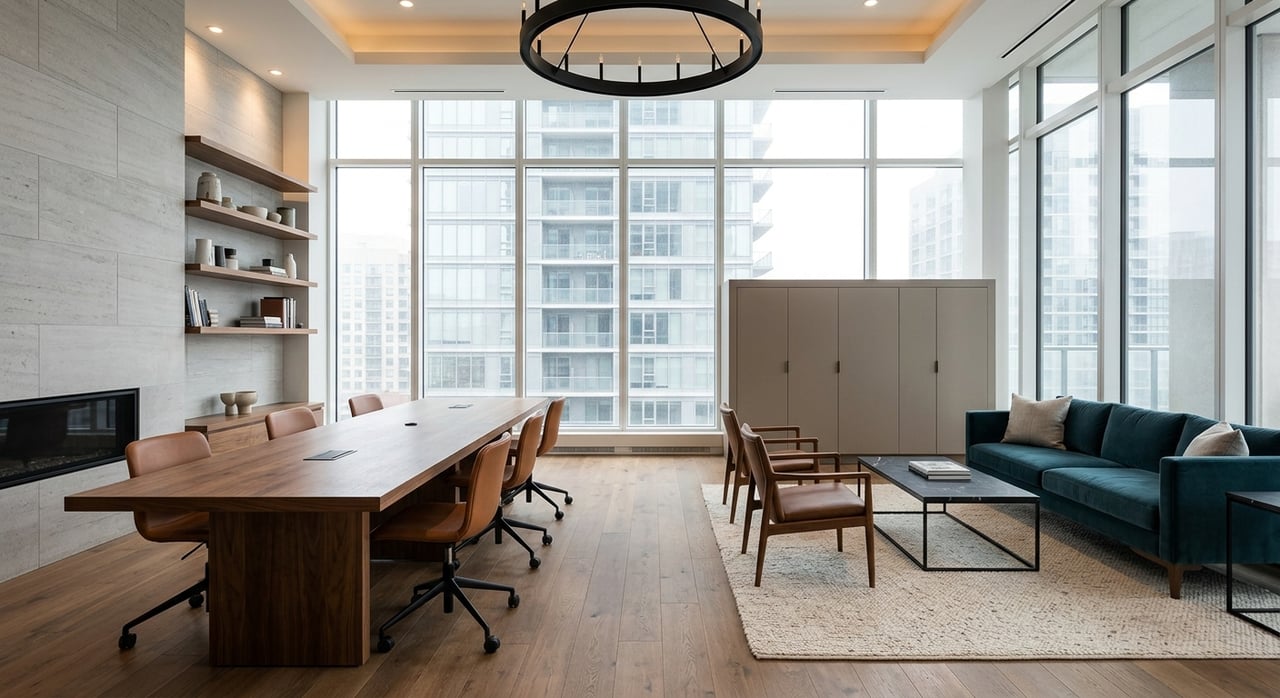
In downtown Seattle condos, that need usually does not show up as a detached office or a large spare bedroom. Instead, buyers are often looking for a den, a one-bedroom-plus-den layout, a coworking lounge, a media room, or another flexible space that can support work during the day and living space at night.
This is one of the biggest shifts in condo shopping today. Many buyers are less focused on raw square footage and more focused on whether the layout can adapt to real life.
There is no universal answer here. It depends on how you work.
A den inside your unit may be more useful if you need privacy, regular video calls, or a dedicated desk setup. A coworking lounge may work well if you want occasional separation from home life, a more social environment, or a backup place to work without increasing your unit size.
For some buyers, the best balance is a smaller in-unit flexible area plus access to shared building space. That setup can preserve livability without paying for a full second bedroom you may rarely use.
Fitness space used to be a nice bonus. In many newer or higher-end downtown buildings, it is now part of the expected package.
Common wellness and recreation amenities in downtown Seattle condos include fitness centers, yoga studios, roof decks, resident lounges, dog runs, dog wash stations, pools, spas, steam rooms, saunas, and media rooms. Not every buyer needs every feature, but many expect at least a few of these options in a full-service building.
The key question is not whether a long amenity list sounds impressive. It is whether the amenities line up with how you actually live.
In general, the best-value amenities are the ones that support repeat use. A well-equipped fitness center, a comfortable resident lounge, practical pet amenities, and an inviting rooftop space may earn their keep more than highly specialized features used only a few times a year.
If you know you will use a building gym several times a week, that may be worth meaningful HOA dollars. If you rarely use spa-style amenities, they may add more prestige than practical value.
Parking is still important downtown, but buyers are asking more nuanced questions now. Instead of simply asking whether a building has parking, many want to know how secure, convenient, and future-ready that parking really is.
That includes assigned stalls, guest parking rules, bike storage, secure garage access, and EV readiness. Seattle City Light’s multifamily EV guidance specifically frames EV charging as a desirable amenity because it allows residents to charge at home, helps future-proof buildings, and expands charging access.
In other words, EV capability is no longer a niche feature. Even if you do not drive an electric vehicle today, EV readiness may matter to your resale audience later.
If you are choosing between the two, a secure and functional garage stall is still foundational for many buyers who own a car. But if two buildings are otherwise comparable, EV readiness can become a meaningful differentiator.
The practical move is to evaluate both together. A secured assigned stall with potential or existing EV charging may be more valuable than parking that exists on paper but feels inconvenient, exposed, or outdated.
Shared amenities get attention, but your unit still does the heavy lifting. Downtown condo buyers continue to prioritize comfort, flexibility, and layouts that make smaller spaces feel more usable.
That often means strong demand for dens, adaptable floor plans, balconies, terraces, and layouts that create separation between living and working zones. In many buildings, buyers are also drawn to view-oriented floor plans and outdoor extensions of the living space.
This reflects a broader shift in buyer behavior. Adaptable design and day-to-day comfort often matter more than simply having more square feet.
When you compare units, pay close attention to features that improve daily use:
These are not flashy talking points. They are the features that often make a condo feel easy to live in.
Downtown buyers are often purchasing the neighborhood experience along with the home itself. That makes walkability a major part of value.
In the 2023 Community & Transportation Preferences Survey, 79% of respondents said walkability was very or somewhat important, and 78% said they would pay more for a home in a walkable community. For Gen Z and millennial respondents, that figure rose to 90%.
This matters in downtown Seattle because a smaller condo may still feel like a strong fit if the building places you close to daily needs, shared spaces, and the wider city experience. For many buyers, access and convenience help compensate for a more compact footprint.
If you may rent out the condo later, amenities should be evaluated through that lens too. Downtown Seattle rent trends have shown renewed strength, with Redfin reporting a 2.5% year-over-year increase in median asking rent to $2,000 in December 2024 across several downtown subareas.
That does not mean every luxury feature will translate into better rental performance. In many cases, practical amenities such as secure parking, package handling, EV charging, bike storage, and flexible work space are likely to support rental appeal more consistently than decorative extras.
Downtown condos are also competing with newer rental towers that offer hotel-style services and shared amenities. So if you are thinking about long-term flexibility, it helps to ask whether your building’s amenity package matches what future renters will realistically value.
A bigger amenity package is not automatically better. The smartest approach is to compare the building’s monthly carrying cost with the features you will actually use and the audience likely to value them later.
Here is a practical framework:
Start with the features that would change your weekly routine. For many buyers, that list includes:
These amenities tend to deliver practical value, not just visual appeal.
If a building offers concierge staffing, spa features, and expansive common areas, ask yourself whether you will use them often enough to justify the fee. If not, a simpler building with strong basics may be the better buy.
This is especially important in downtown Seattle, where association fees can be a meaningful part of your monthly housing cost.
Even if you plan to stay for years, resale matters. Flexible layouts, secure building operations, quality shared spaces, and EV readiness may support broader appeal than highly specific luxury perks.
The goal is not to buy the flashiest building. It is to buy the one that aligns with your daily life and remains competitive over time.
In downtown Seattle, the building is part of the product in a very real way. Service, security, flexibility, wellness space, mobility features, and walkability all shape how a condo lives and how it may perform later.
That is why condo buyers benefit from looking beyond staging and skyline views. A careful review of the amenity package, HOA structure, and building operations can help you separate true long-term value from features that only look good in marketing.
If you want a clear, strategic read on downtown Seattle condos and which amenities are truly worth paying for, John Thompson offers senior-level guidance tailored to your goals.
Stay up to date on the latest real estate trends.
Etiam non quam lacus suspendisse faucibus interdum. Orci ac auctor augue mauris augue neque. Bibendum at varius vel pharetra. Viverra orci sagittis eu volutpat.