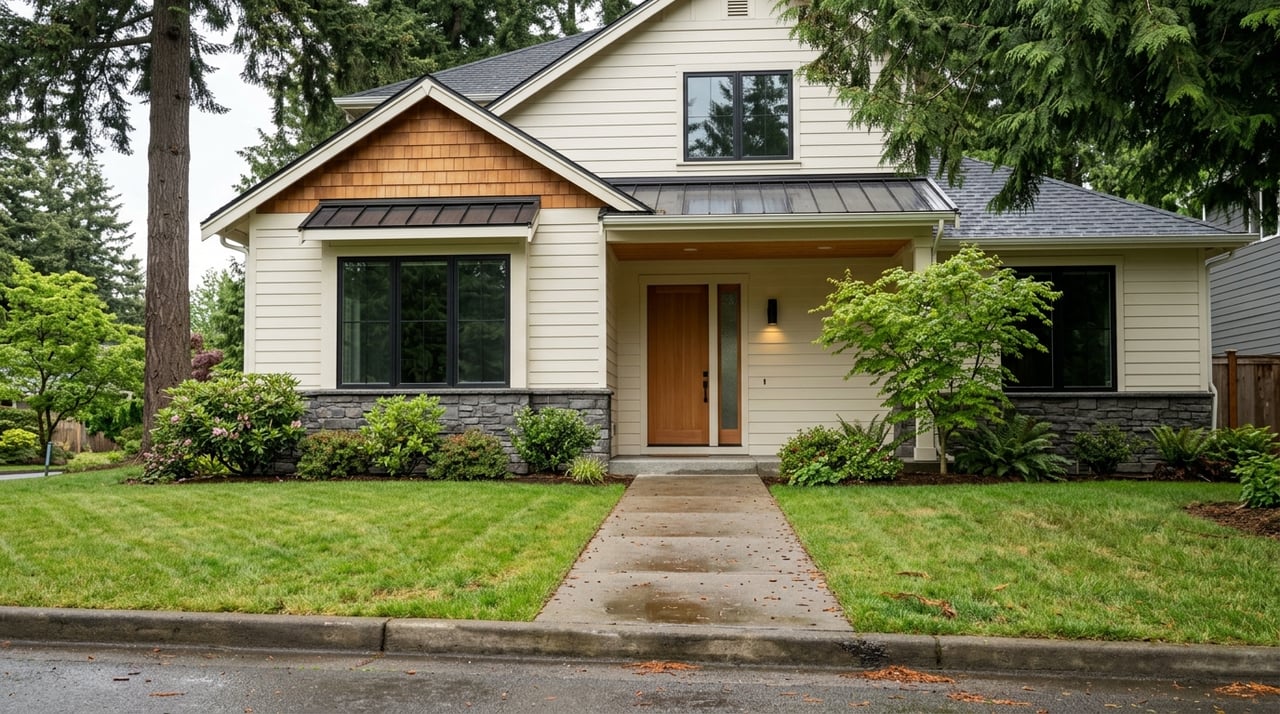
Olde Town vs Issaquah Highlands: Which Fits You Best?
July 9, 2026
July 9, 2026
Choosing between Olde Town and Issaquah Highlands is not just about square footage or finishes. It is about how you want your day-to-day life in Issaquah to feel. If you are trying to decide which neighborhood better matches your routine, commute, and housing goals, this guide will help you compare the two with more clarity. Let’s dive in.
Olde Town and Issaquah Highlands offer two very different living experiences within the same city. Olde Town centers on Issaquah’s historic downtown fabric, while Issaquah Highlands was designed as a planned urban village with a broader range of neighborhood types.
Neither is inherently better. The right fit depends on whether you value historic context and downtown access, or a more structured neighborhood environment with built-in amenities and strong commuter connections.
Olde Town is Issaquah’s historic downtown core. The city describes it as a neighborhood that predates suburban, car-oriented development and highlights its traditional architecture, small-scale businesses, and access by car, bus, bicycle, or foot.
That history shapes the feel of the area today. The Olde Town Subarea Plan emphasizes preserving the existing fabric and maintaining a Main Street mixed-use environment rather than creating a master-planned neighborhood from scratch.
If you are drawn to homes with a sense of place, Olde Town may stand out. Its housing context is rooted in older residential character, smaller-scale mixed use, and selective infill rather than one uniform housing style.
The city plan also calls for increased housing variety while preserving neighborhood scale and character. It specifically references options such as accessory dwelling units, artists’ lofts, and senior housing, which points to a more incremental and diverse housing pattern over time.
Daily life in Olde Town tends to revolve around downtown Issaquah. City planning documents point to Front Street as the historic commercial center and note pedestrian-scaled retail and restaurants, the Village Theatre, the Issaquah Library, the historic train depot and museum, and the Issaquah Salmon Hatchery.
If you like the idea of errands, dining, and local events being tied to a historic downtown setting, that rhythm may appeal to you. The environment is shaped less by one private development plan and more by a civic, mixed-use street network.
Issaquah Highlands offers a very different framework. The city describes it as a planned urban village, and the community reports that it includes more than 4,000 homes across more than 20 neighborhoods.
That scale gives the Highlands a more intentionally varied but coordinated feel. Official community guidelines cover both single-family and multi-family properties and identify neighborhood types such as House and Garden, Cottage Lane, and Traditional Townscape.
For buyers who want a neighborhood with more formal design structure and a broad mix of home types, the Highlands may feel like a stronger match. The community describes its housing as serving a range of needs, from extended-family homes to options for empty nesters.
This does not mean every home feels the same. It means the variety exists inside a planned framework, which can create a more consistent neighborhood experience as you move from one area to another.
The Highlands was designed so many daily needs are close to home. The city and community describe a mix of retail, restaurants, services, a community center, a hospital, a fire station, parks, trails, and preserved open space within the neighborhood environment.
If you want a setting where many amenities are integrated into the community itself, this is a major distinction. The Highlands leans into walkable mixed-use planning at a neighborhood scale.
For many Issaquah buyers, access to parks and trails is a major factor. Both neighborhoods offer strong outdoor connections, but the type of access is meaningfully different.
Olde Town’s outdoor network is closely tied to downtown parks, creeks, and connector routes. The Olde Town Subarea Plan calls for a connected system that includes Memorial Field, Pedestrian Park, Front Street properties, Confluence Park, and downtown plazas and parks.
In practical terms, this creates a more civic and creek-oriented outdoor experience. Confluence Park includes a pedestrian and bike bridge with creek and lake views, and the Maple-Juniper multiple-use trail links SR 900 and 17th Avenue NW to Olde Town and connects onward to the Rainier Multiple Use Trail.
Issaquah Highlands offers direct access to a much larger forested trail system. The community says it includes 1,540 acres of dedicated open space, 26 parks, and more than 10 miles of walking, biking, and hiking trails.
King County also identifies Grand Ridge Park as a 1,200-acre forest with an 11.9-mile trail network, and notes that Grand Ridge Trail can be accessed from Central Park in Issaquah Highlands. If you want immediate access to larger-scale wooded recreation, that is a key advantage of the Highlands setting.
Your commute pattern can quickly tip the scales between these two neighborhoods. Olde Town and Issaquah Highlands connect to the broader region in different ways.
Olde Town functions within a downtown street network. The city’s transportation planning identifies Front Street as a principal arterial and key access point to downtown Issaquah, and the Olde Town plan emphasizes pedestrian and bicycle connections, traffic management, and parking management.
If your routine depends on moving through downtown streets, local stops, and walkable access, Olde Town may fit naturally. It supports a different pace and circulation pattern than a park-and-ride oriented neighborhood.
The Highlands is more directly tied to commuter infrastructure. Sound Transit lists the Issaquah Highlands Park & Ride with 1,000 parking spaces, and current service includes routes 203, 218, 269, 554, and 556.
The city’s transportation analysis also notes that Highlands Drive NE connects I-90 to the Highlands and Sammamish Plateau and serves as a main access corridor with bus transit. If freeway access or park-and-ride habits are central to your week, the Highlands is the clearer fit.
The best choice often comes down to how you define convenience. Some buyers want the texture of historic downtown living and a neighborhood shaped by local streets, older homes, and civic amenities. Others want a community where trails, services, and commuter access are integrated into a more planned setting.
A simple way to compare them is to think about where your time will go most often: downtown sidewalks and local gathering places, or neighborhood amenities and regional trail access.
When you visit each neighborhood, pay attention to more than the home itself. Notice how easy it feels to move through the area, where amenities are located, and what kind of outdoor access is built into everyday life.
In Olde Town, focus on street pattern, downtown activity, and the surrounding mix of homes and businesses. In Issaquah Highlands, focus on neighborhood layout, access to parks and trails, and how close daily services feel to the homes you are considering.
The right move is rarely about choosing the most popular option. It is about choosing the place that supports your routine, your priorities, and the type of home experience you want over time.
If you are weighing Olde Town against Issaquah Highlands, a guided tour strategy can save you time and sharpen your decision. For tailored advice on Issaquah neighborhoods and a more strategic home search, connect with John Thompson.
Stay up to date on the latest real estate trends.
Etiam non quam lacus suspendisse faucibus interdum. Orci ac auctor augue mauris augue neque. Bibendum at varius vel pharetra. Viverra orci sagittis eu volutpat.